
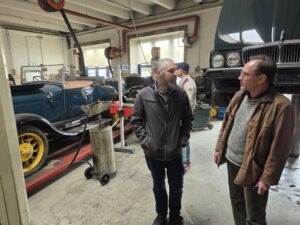
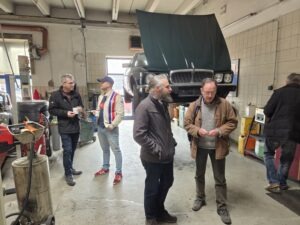
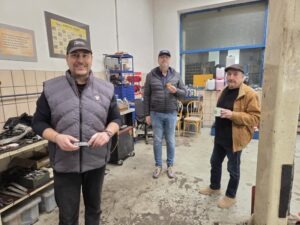
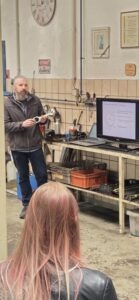
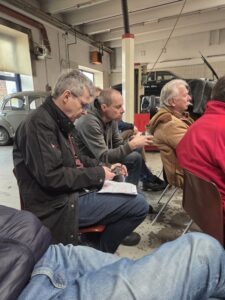
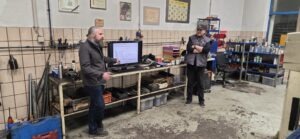
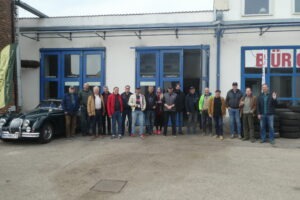
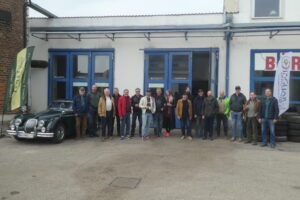
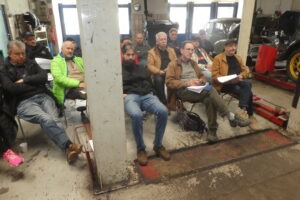
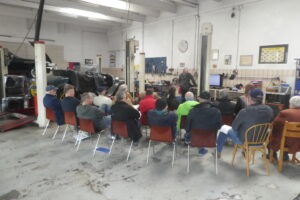
On Saturday, 21 March 2026, another technical workshop on the topic of ‘Vehicle Service and Maintenance’ took place at the premises of our partner and sponsor, Histo–Tech GmbH, run by Markus Gräf in Neunkirchen.
In the recent JDOST member survey, many members suggested a technical workshop on general servicing and maintenance work, which has now taken place at Markus Gräf’s premises.
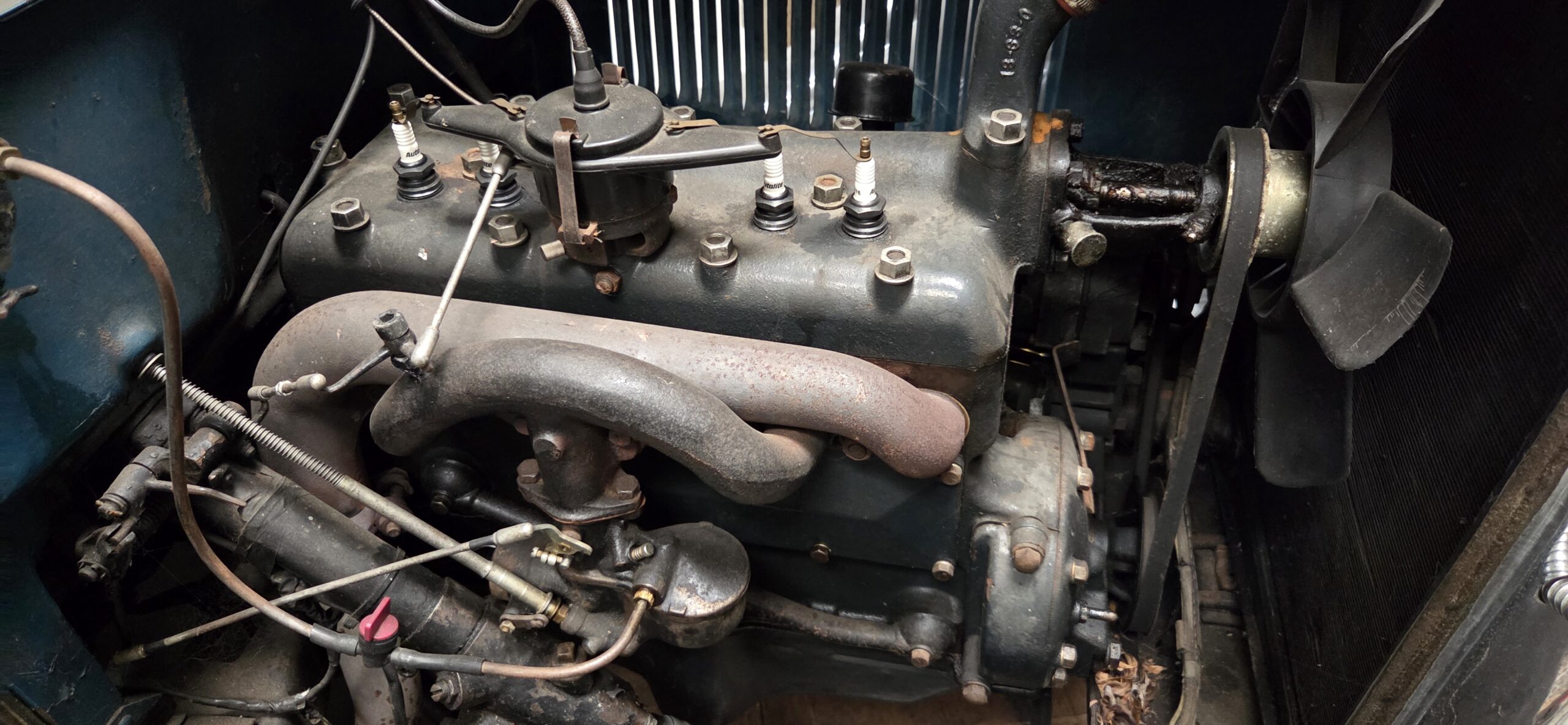
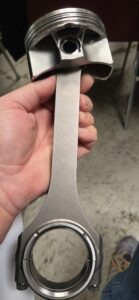
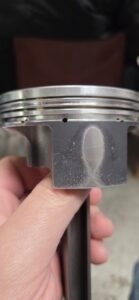
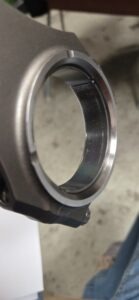
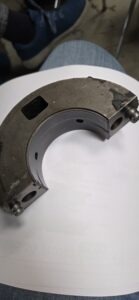
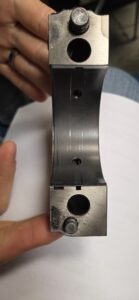
Markus provided information on engine oil, covering winter suitability and high-temperature viscosity, the use of multigrade oils, and the inherently critical issue of cold-starting an engine and the resulting wear. Classic cars and other vehicles that are not driven during the winter should always be run on the thickest oil permitted by the manufacturer’s specifications to keep engine wear to a minimum. For classic cars, the standard oil recommended is 20W-50 multigrade oil. To prevent the crankshaft and connecting rod bearings from being immediately subjected to the pressure of combustion in the cylinder after long periods of inactivity, the ignition cables can be disconnected and a brief start-up performed to ensure a uniform distribution of the oil film in the critical bearing areas.
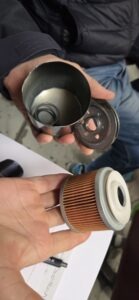
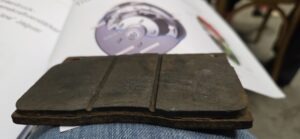
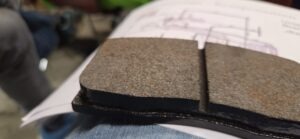
The working principle of modern, complex oil filters was also explained; in particular, it was advised not to use cheap filters, as particles of filter fleece can become dislodged and cause serious damage to components such as turbochargers or other engine parts. Valuable tips were also provided on brake maintenance, particularly regarding disc brakes and the brake fluid to be used. Where possible, this should be stored in metal containers, as plastic canisters allow moisture to diffuse into the container, meaning that new brake fluid (which is hygroscopic – i.e. substances that actively attract and bind water) can already deteriorate whilst still in the container. With disc brakes, the use of copper paste for lubricating the brake pad guides is no longer permitted, as copper paste can cause corrosion between the brake piston and the slave cylinder. Instead, there is a permanent lubricant from Plastilube and a high-temperature multi-assembly paste from PETEC. The properties and applications of different coolants in green, orange/red and yellow/blue were explained, and it was pointed out that these must not be mixed together, as this can lead to sludge formation and other chemical reactions. Prestone produces a coolant that can be used universally in all vehicles, makes, models and model years, and can be mixed with the existing coolant in the cooling system, regardless of its colour or composition. This coolant is available in Austria from car accessory shops and DIY stores.
The technical workshop was rounded off with Markus Gräf answering countless questions. Even though classic car owners are knowledgeable about many topics, there is always useful, interesting information that is worth knowing and can be easily applied in practice. The tips provided by Markus Gräf are, in any case, indispensable.
The 20 enthusiastic participants were treated to coffee, Danish pastries and excellent sandwiches, and are already looking forward to the next technical workshop with and hosted by Markus Gräf.








New comments